40 Years of Research
The Living Archive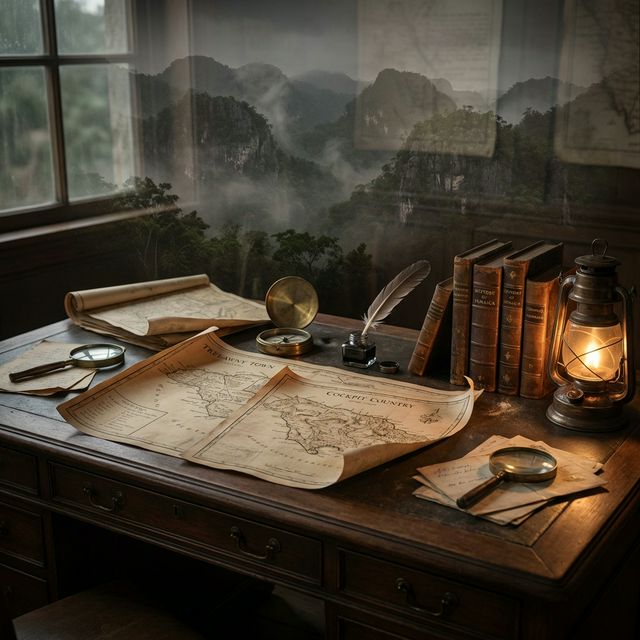
The Living Archive
About the Research
"Correcting the Record. Honoring the Ancestors. Restoring the truth of a free people who defied an Empire."
Explore the Archive
"Correcting the Record. Honoring the Ancestors. Restoring the truth of a free people who defied an Empire."
Explore the ArchiveThis website stands as the culmination of over 40 years of meticulous research into the history of the Trelawny Town Maroons. For too long, the narrative of the Maroons has been filtered through the eyes of colonial oppressors—governors, military officers, and plantation owners. Our mission has been to peel back layers of colonial bias to reveal the truth about a free people who maintained their Identity in the face of the British Empire.
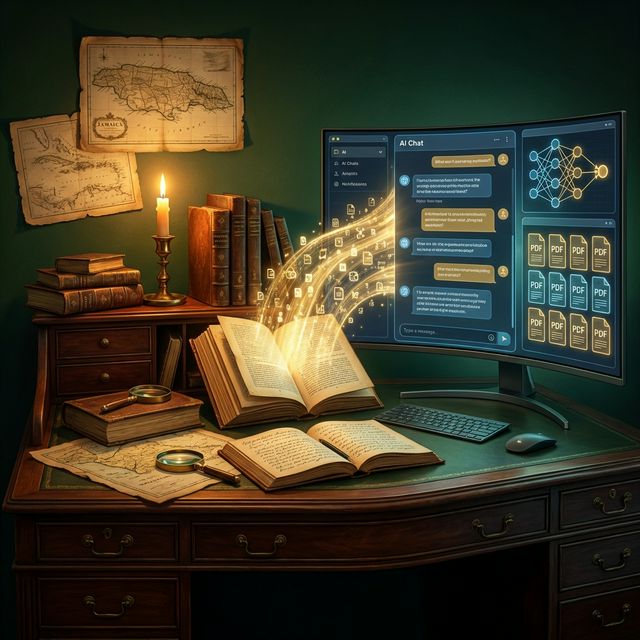
"What began with a single book and a burning question has grown into one of the most technologically advanced private archives on Jamaican Maroon history in the world. Over 40 years, our library evolved from physical rare books to digitized PDFs — and today, it is powered by five local AI models through a RAG system that can interrogate over 2,500 volumes simultaneously. The tools have changed. The mission never has."
Our archive is extensive and unprecedented. It includes:
History is not merely a collection of dates; it is a battle for memory. As Nina Simone said, "There's no excuse for the young people not knowing who the heroes and heroines are or were."
Our research has uncovered truths that challenge established narratives. We have located the exact sites where both Maroon treaties were signed. We have identified the true location of "Petty River Bottom" and "Guthrie Defile." We have traced the history of "Dragoon Hole" and how "Gun Hill" got its name.
Most importantly, we have documented the final resting places of Maroon leaders and detailed the military barracks and estates like Samuel Vaughn's and Kamure's. We have reconstructed the "Mock" trial in Jamaica and the subsequent legal battles in England that sealed the fate of the Trelawny Maroons.
This project is not just about the past; it is about the living memory of the Maroon people. We have collected oral histories to supplement the written record, ensuring that the voices of the ancestors speak as loudly as the ink on colonial paper.
From the rugged limestone cliffs of the Cockpit Country to the frozen shores of Nova Scotia and the coast of Sierra Leone, we have pieced together the fragmented story of the 1795 War and the betrayal that led to the exile of an entire community. We present this work to honor Maroon Captain Johnson, Montague James, and the hundreds of men, women, and children who fought for their freedom.