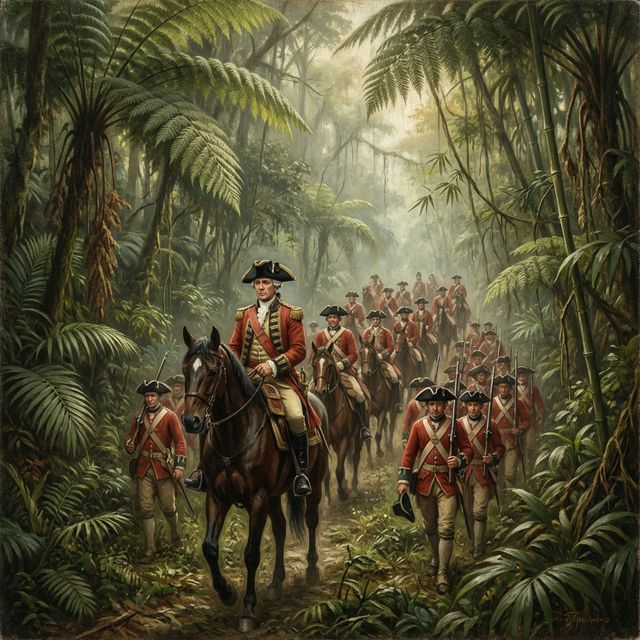
In 1795, a new Governor arrived in Jamaica: the Earl of Balcarres. A man of ambition and
military arrogance,
he viewed the Maroons not as treaty partners but as a "dangerous imperium in imperio"—an empire within an
empire.
He was looking for a reason to crush them. In early July, he found it.
The Spark
Two Maroon men were accused of stealing hogs from a plantation. Instead of being tried by their own leaders
(as the Treaty mandated), they were tried in Montego Bay. Their punishment was not just harsh; it was
designed to humiliate.
They were whipped by a slave driver.
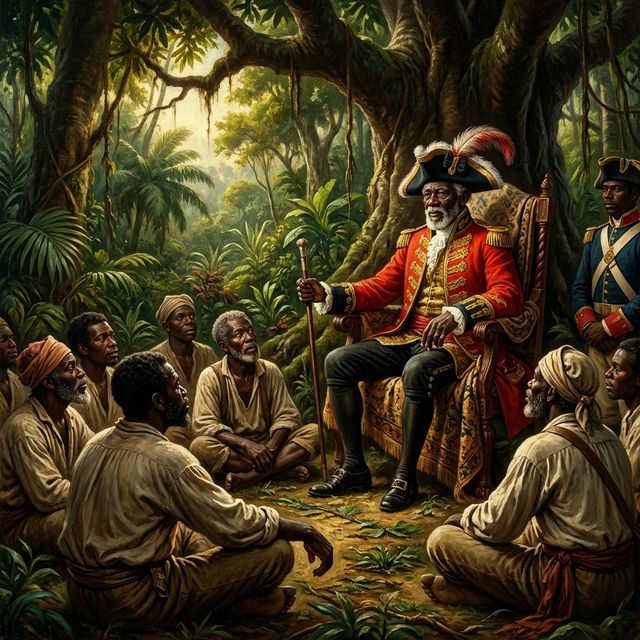
Old Montague James —
Last Captain of Trelawny Town — presides over the war council. When news of the whipping reached
the town, it was here, in the jungle clearing, that the decision was made. There would be no
petition. No appeal. Only war.
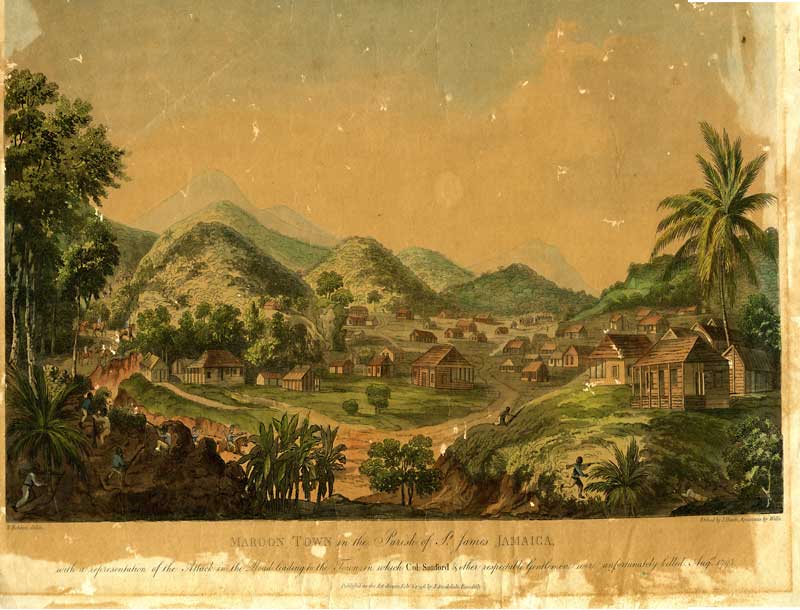
Trelawny Town before its destruction in 1795.
This was the ultimate insult for free men. When they returned to Trelawny Town, the outrage was explosive.
The Maroons demanded justice. Balcarres answered with martial law.
The Ambush of Colonel Sandford
August 1795 — Cockpit Country, Jamaica
"Colonel
Sandford led over 1,500 men into the narrow defile — marching into a trap they could not see."
In August 1795, Balcarres ordered his troops to march on Trelawny Town. The Maroons, knowing they could not
defend the town against cannon fire, burned their own homes and retreated into the virtually impenetrable
Cockpit Country.
There, they turned the tables. Colonel Sandford, leading a massive column of over 1,500 men—including the
elite 20th Light Dragoons and local Militia—marched into a narrow defile expecting an easy victory.
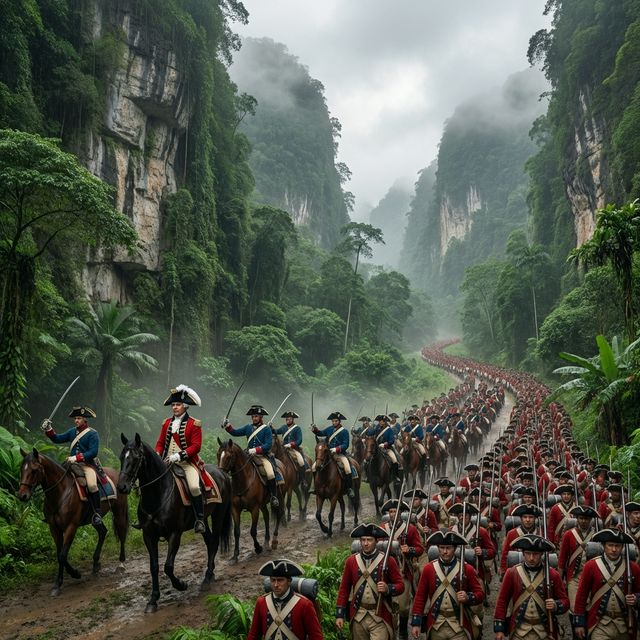
The British column, nearly half a mile long,
marching into the trap.
Sandford made a fatal mistake. Arriving at the abandoned "New Town," he ignored orders to turn right onto
Coote Bush Road. Instead, driven by arrogance, he marched straight ahead into the "Dragoon Hole"—the lowest
point of the road.
The Tactical Error
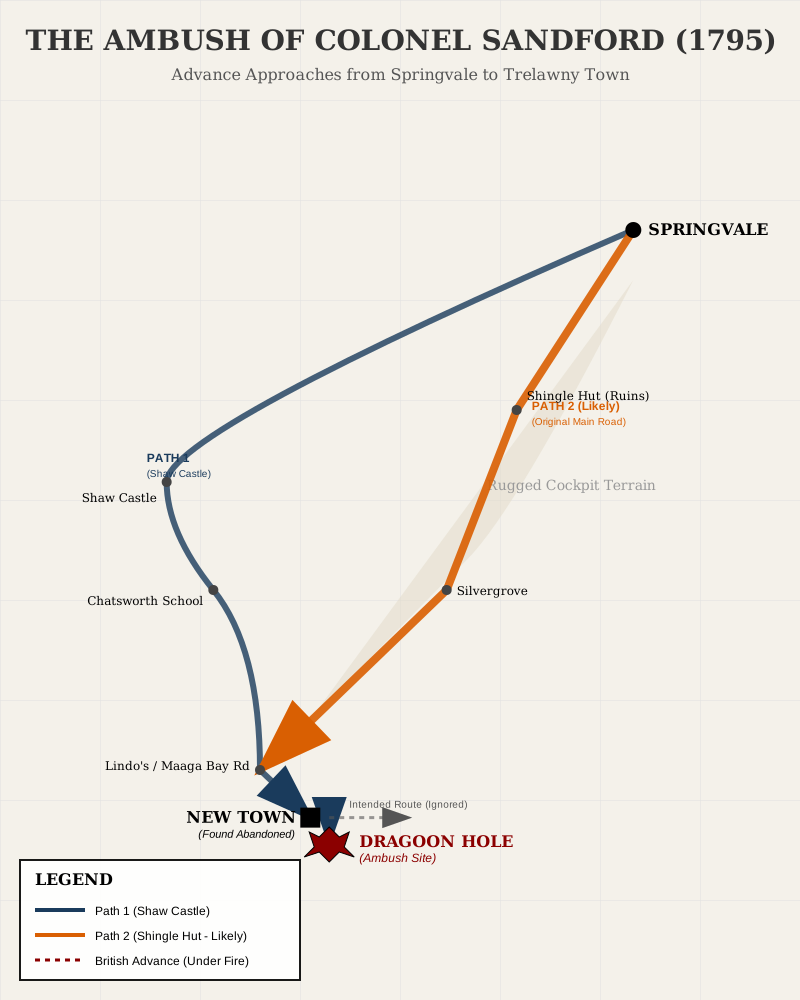
Sandford's advance (Red) vs. Intended
Route (Grey).
The Vertical Trap
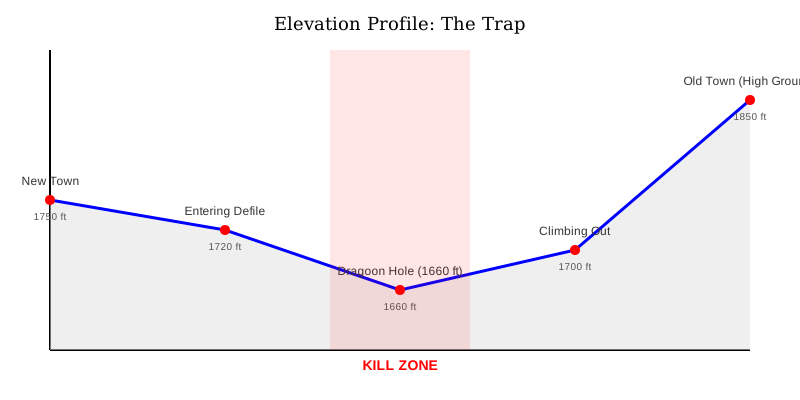
The column was trapped at the lowest
point (1660 ft) with Maroons firing from above.
The "Dragoon Hole" in 3D
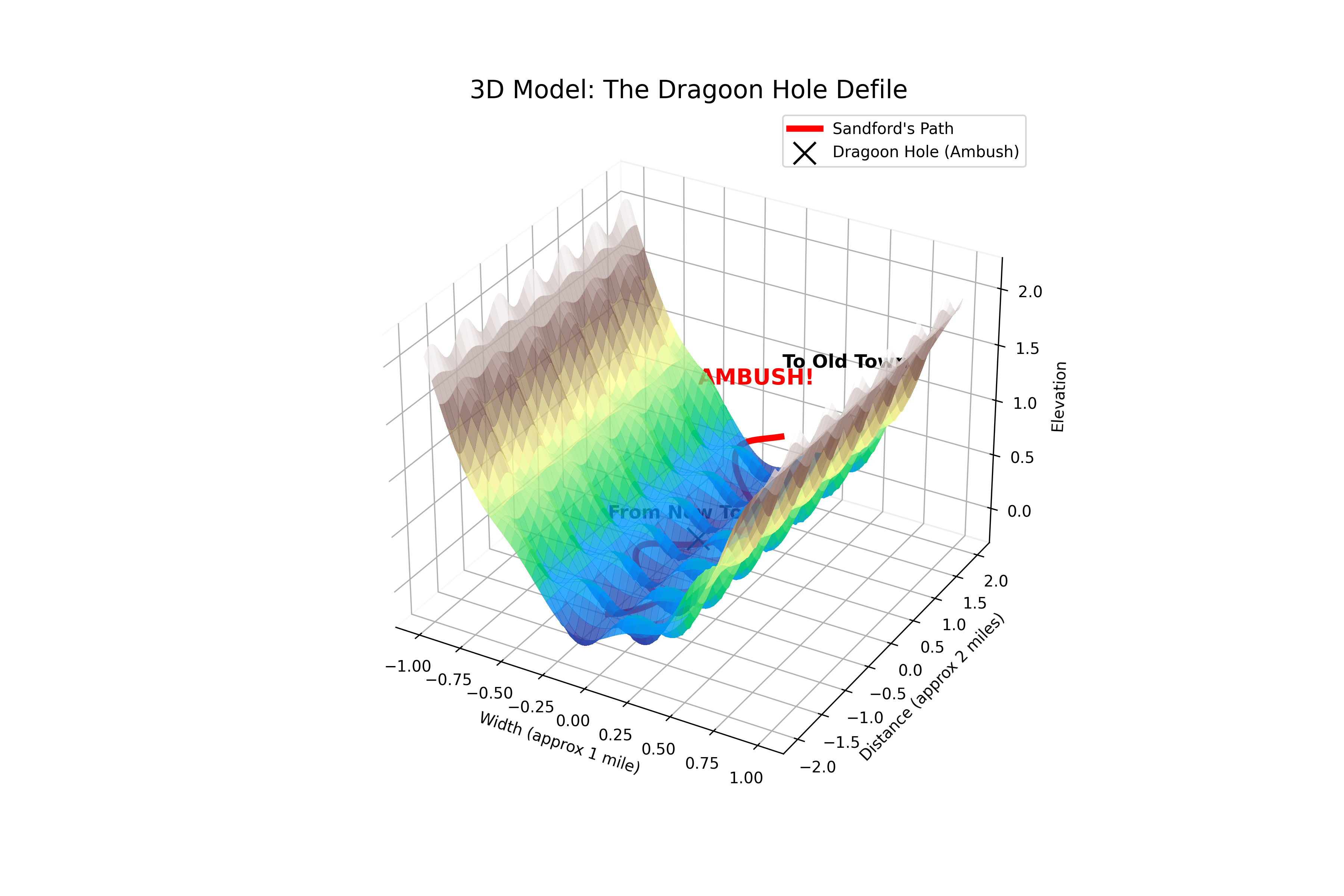
A 3D reconstruction of the terrain based on historical accounts.
Sandford marched down the slope into the killing zone.
As the head of the column began to climb out of the hole, a "Tremendous Volley" erupted from the bushes. The
Maroons, invisible in the green hell, decimated the officers first. Colonel Sandford fell
instantly. Panic ensued. The massive force, trapped in the narrow road, could not maneuver. It
was a massacre.

"One Maroon in the bush is worth ten British
regulars."
The Turning Point: Terror
For months, the Maroons held out against thousands of British troops. Colonels fell. Regiments were
humiliated. The "Invisible Army" seemed invincible.
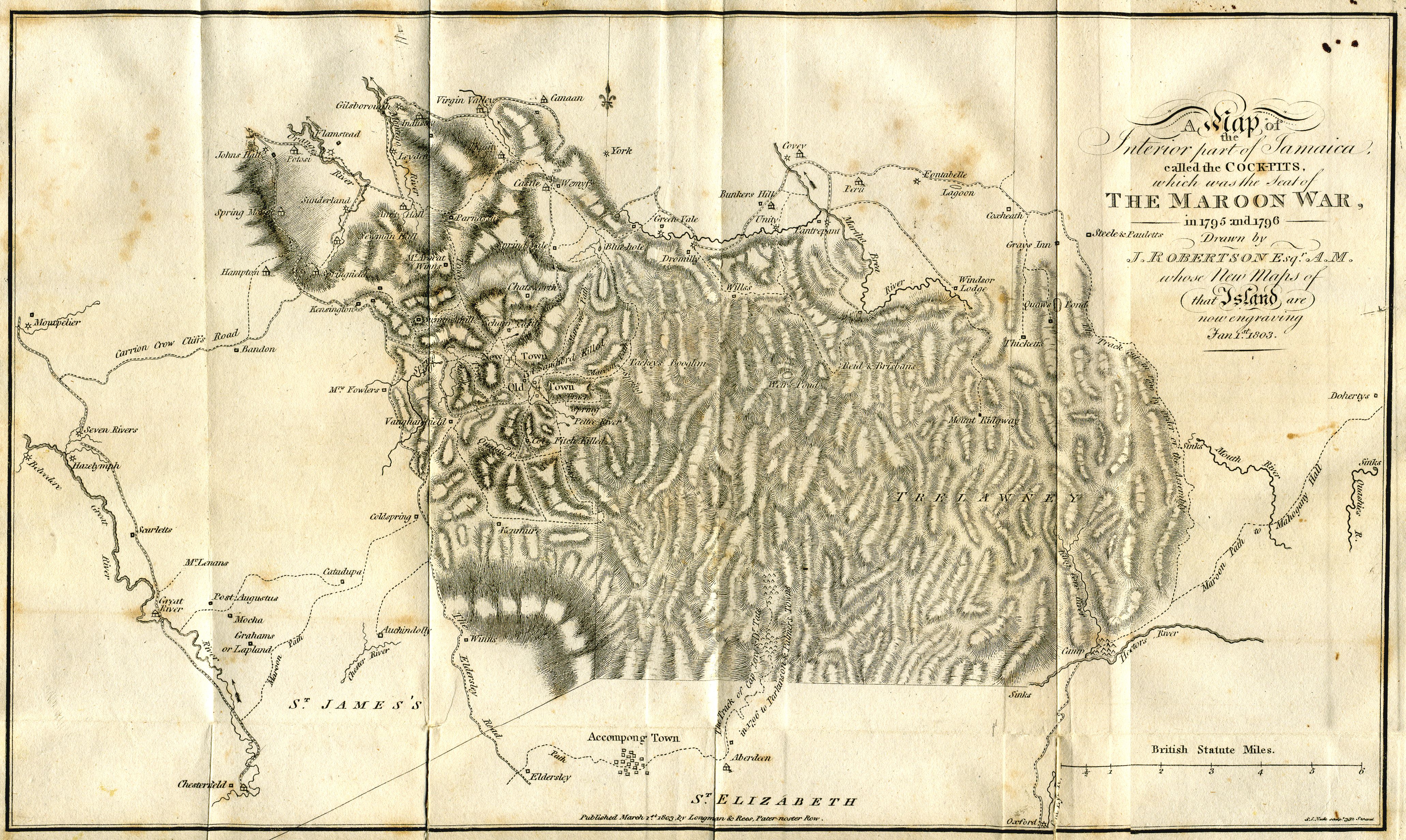
James Robertson's Map (1804) detailing the
landscape of the war.
Desperate, Balcarres resorted to terror. In December 1795, he imported 100 ferocious bloodhounds and their
handlers from Cuba. The threat of these dogs attacking Maroon families forced a painful decision: they
agreed to negotiate a surrender, but only on the condition they would not be deported.
The Final Betrayal
General Walpole promised them they could stay in Jamaica. The Maroons laid down their arms. But Balcarres,
furious at being humiliated, broke Walpole's word. Using a trivial deadline technicality, he arrested the
Maroons and ordered their immediate deportation to Nova Scotia.
The Occupation
With the Maroons gone, the British wasted no time. They built a permanent barracks on the ruins of Trelawny
Town to ensure no one would ever claim the land again.
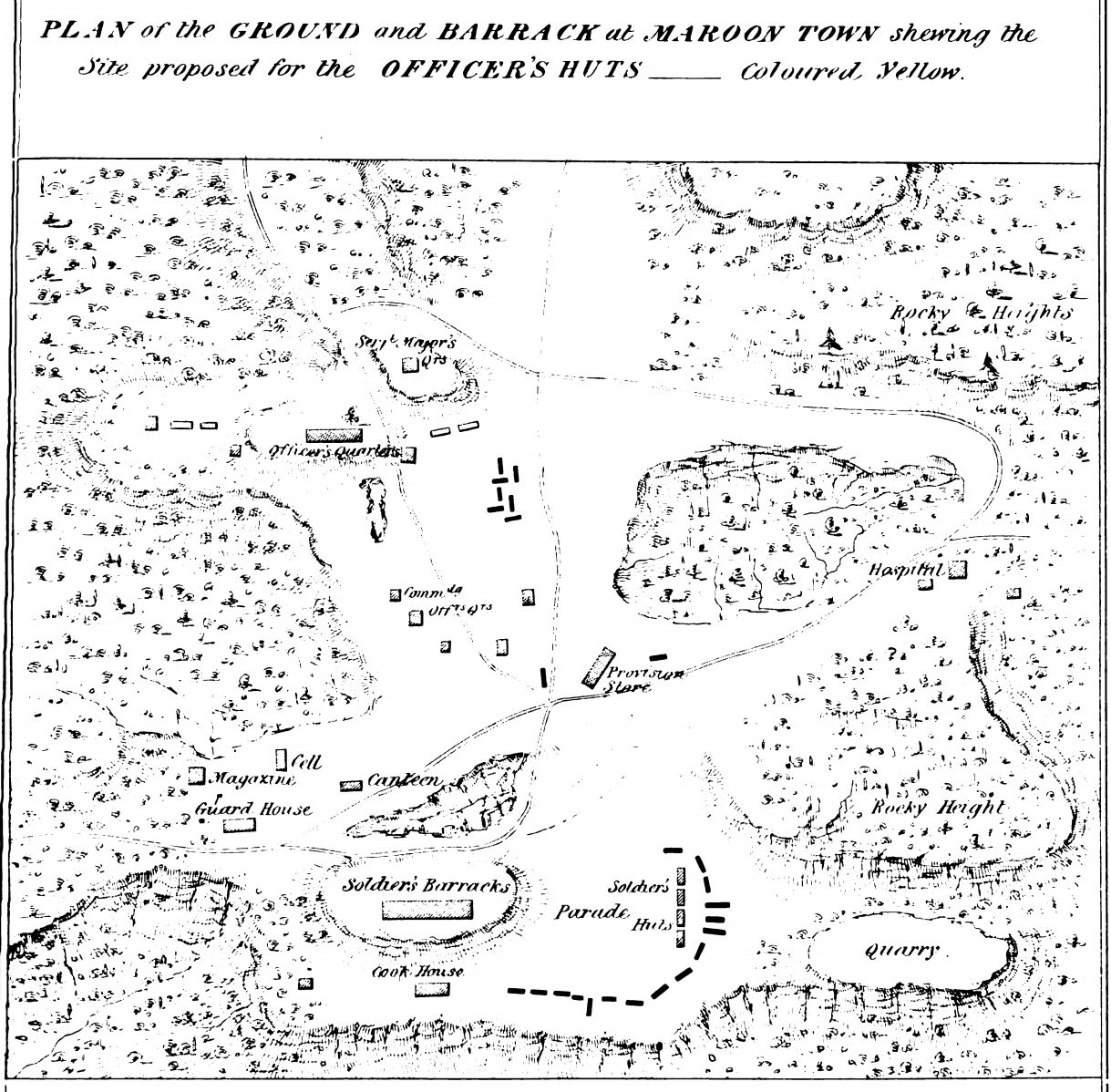
Plan for the massive barracks built over the Maroon homes.
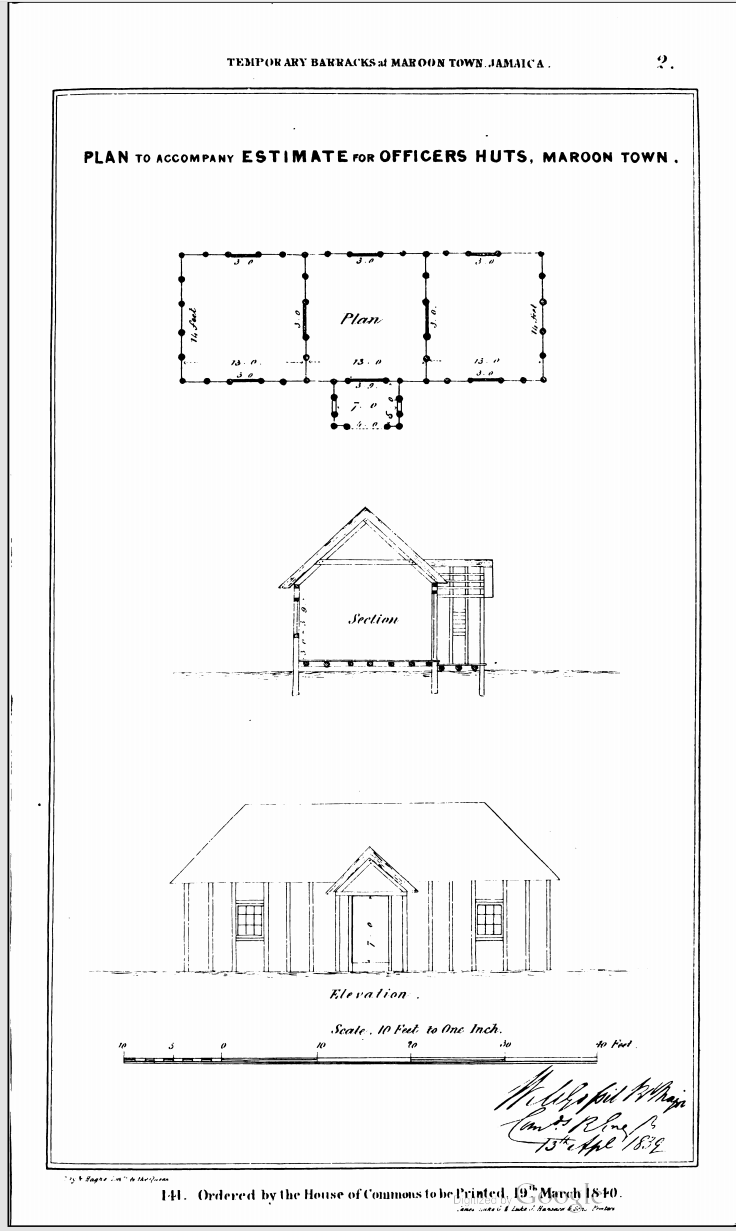
Design for the British Officers' specialized housing.